LAST POSTS

Showing posts with label Videos. Show all posts

7 Oct 2015

Natural disasters: Chile's earthquake

Hi! 

Today I post a quick listening activity with a video from Reuters News Agency. It covers the earthquake and later tsunami that affected Chile last September 2015. As you know, the topics of "cities", "natural disasters" and "the environment" are included in our curriculum, and therefore in the contents of the different levels.

I ask you to find some time to do this listening activity, and write down some interesting words you could learn. Remember:

  • Watch once for general understanding (forget about the activity at the beginning)
  • Do the activity in the second listening
  • Finally, check your answers in the last listening

As usual, remember that the answer key is at the end of the document :)

Thanks for watching!


After watching this video and doing the activity, you might want to visit: "School reopens after Oklahoma tornado".
Read more...

23 Jan 2015

Videos with useful phrases according to your level!

Hi there!

Today I wanted to share with you a very useful section within the Inside Out website. It contains videos with useful phrases categorised into different levels: pre-intermediate, intermediate and upper-intermediate.

Here you  have the first video of the series. Scroll down and continue watching more videos which correspond to your level. I'm sure you can all understand a lot!


I also take advantage of this entry to recommend you another incredibly useful website to do listening at home (audio this time, not video, I'm afraid). It is listed in the resources I recommend for listening (make sure you check that section! --> resources online > skills > listening).

The website is www.esl-lab.com, and all the listenings are divided into different levels. You can choose the type of activity you want (open questions; multiple-choice questions or filling the gaps), and you have the transcription as well. Very useful!! :)


I hope you start using these websites!
Read more...

12 Dec 2014

Stop phubbing! But... what is that??

Has it ever happened to you that you're with somebody who just can't stop looking at his/her mobile?? How annoying can that be? Well, apparently you're not the only one who gets annoyed!!

In English a new word has even been invented to describe this phenomenon, and it's "PHUBBING":


This kind of situations has become "trending topic" in the last years, and it's just that people don't seem capable of disconnecting from the virtual world!! An entire website (extremely funny, by the way!!) has opened: www.stopphubbing.com. They include data, figures, interesting facts and even a letter you can send to your friends to make them stop phubbing!!


Some of the facts they publish are certainly thought-provoking... See for yourself!


According to this, what will communication be like in a few years? Are you scared of what can happen?

Many people prefer to take it humorously and denounce the situation making videos as funny as this one, by "The Britishes"!:


Funny, huh? :P

Now, if you want to take it a bit more seriously, below I include probably the most watched YouTube video on this topic. It's very straightforward, but composed beautifully in the form of a poem. Its rhythm, careful choice of words and the story behind certainly manages to touch the viewer.

"Look Up", by Gary Turk (click for full text):


Well, after all this I do hope we manage to change our attitude towards smartphones and learn how to enjoy life minute by minute! :)
Read more...

21 Nov 2014

The Christmas Truce - The story behind Sainsbury's Christmas Ad

Hi everyone!

Christmas is coming closer; the days are ticking away...! We can tell from the sweets and cakes already sold at the supermarket, and especially from the adverts shown on television. Last week the commercial for the National Lottery came out - every year we are nervously waiting for it! Our high expectations were certainly met and the advert left nobody impassible.

I believe you would agree that the National Lottery advert is probably the most important Christmas advert in Spain, but would you guess which has been considered the best Christmas advert in the world?


It's the Christmas commercial from the British chain supermarket Sainsbury's:


The video is certainly touching, but what is even more touching is to know that it is entirely based on a true story...

By December 1914 World War I had already gone on for around 5 months, and claimed nearly one million lives. However, the weapons fell silent on Christmas Eve... A Captain from the Allies made contact with two German officers at dawn, starting a truce in which soldiers started to leave their trenches and met in hundreds exchanging greetings and gifts.

The true story behind the ad:


All the details of what really happened we cannot know for sure, but there was certainly a truce along the front line. Even at the toughest of times, in the heat of war and in the most dreadful occasions, there can be great humanity...

Read more...

17 Nov 2014

"Bed and breakfast", "fish and chips" and other binomial expressions

A binomial is a combination of two words, normally linked by a conjunction (and or or). Their order is almost always fixed, that is, they are irreversible.

English is extremely fond of binomials, and when I say "extremely", I do mean "extremely"!  If you want to check for yourselves, have a look at this list of binomials, with their corresponding meanings. You'll be surprised!

Do these ones ring a bell??


Some other common ones include:


If you want to know a few more, check the video below: "10 common binomial expressions in English". She speaks rather slowly, but her explanations and examples are very accurate!


Finally, for more advanced learners, here I post a handout with some more complex ones. See if you can complete the exercises! (The answers are at the end, as usual!)


Now, the best way to remember binomials, as every other item of vocabulary, is to place them in context. Choose your favourite ones and post a few examples in the comments below!
Read more...

Stereotypes; Lonely Planet Guide

Hi everyone!

The entry today is about "stereotypes". I'm sure all of you have heard the word before, and have a vague idea of what they are, but could you think of a definition??

Now, that is a bit more difficult...

In general, stereotypes are characteristics or qualities assigned to groups of people that share nationality, race, gender, to name but a few. However, these characteristics or qualities tend to be oversimplifications, and they are overgeneralized. In other words, those features are applied to all the individuals in the group disregarding their personal differences.

Now, have a look at this postcard. What do you think of it? Do you agree with the stereotypes associated to the different European nationalities?

There are stereotypes all around us. Below you have a funny (but very insightful) video about what the United States and Europe think of each other. I'm sure you'll feel identified more than once!


How wrong stereotypes can be is usually clearer when we talk about our own culture. Below I post a video about how Madrid is described in the Lonely Planet guide. Do you agree with the image given of the Spanish capital city? 


The best way to overcome stereotypes is to check for yourself! That is, meet people from different parts of the world, travel as much as you can, and read! That way you'll have a more accurate vision of the different nationalities!
Read more...

6 Nov 2014

Politics: anti-corruption raids in Spain

Hi everybody!

Today's entry is a summary of one of my lessons and, as you can see, the topic is politics. I'm going to share some of the materials I used in class for you to practise reading, listening and also learn some vocabulary related to politics!

Without a doubt, politics is becoming a hotly debated topic in the streets today because of the countless cases of corruption that are coming to light. What characteristics do you think every politician should have? Would you include some of the ideas below? (please, look up the new words in a dictionary).

Every time there is a "domestic" scandal, it is well-advised to investigate a little bit and see how the international press is covering it. Is the image of Spain abroad changing? For the better or for the worse? Have a look at the following three newspaper articles and see for yourselves:
After reading the articles, take some time to think about the following questions:
  1. What are the main points put forward?
  2. How is Spain depicted?
  3. Is there any reference to the Spanish citizens' attitude towards these events?
  4. How do you feel about the articles?
Finally, we're going to end with a short video from Euronews. Watch it the first time to see how much you understand. Then do the listening activity below (the answers are at the end of the document, as usual!)


After these activities I hope you now have some more ideas and vocabulary to talk about this so up-to-date topic!
Read more...

31 Oct 2014

History of Halloween; pumpkin carving

pumpkin carving
Hello everyone!

Today is Halloween and I want all of you to be ready! :) To start with, do you know where the tradition comes from? Here you have a powerpoint presentation with the history of this festivity!


History of Halloween

On the presentation they also talk of the jack-o'-lantern! Originally, it was made of turnip, but now it is made with pumpkins! Have you ever tried pumpkin carving? It's not difficult! All you need is a pumpkin, a knife, a big spoon and a pen!

pumpkin carving


Watch the video below to see how to do it!


Basically, all you need to do is:
1) Remove the top of the pumpkin with the knife. 
2) Take out all the seeds with a spoon. 
3) Then draw a face on the pumpkin and cut it with a knife!
4) Finally, put a candle inside!

Click for some pumpkin carving ideas!!

So... are you going to make a pumpkin this year?? :)
Read more...

22 Oct 2014

"Near" or "nearby"...?

Hi there!

Today I'm going to talk about the difference between the words near and nearby. Their meaning is very similar; the difference is how they are used in the sentence.

NEAR can be a preposition or an adverb. As a preposition, it is followed by a complement:
I live near the museumThere is a supermarket near here.

As an adverb, near appears at the end of the sentence:
near nearby
The next bus stop is quite near.

She's getting nervous because her wedding is very near!

NEARBY, on the contrary, is an adjective, and it can appear before and after a noun.

There is a nearby church.
The nearby town is famous for its wine.
There is a park nearby.


Nearby can also appear "alone", but it is still an adjective: the shop is nearby/very expensive. Or an adverb! I live nearby (= I live near here)


Finally, here I post a video of a teacher explaining all this (remember that you can activate the subtitles!):

Read more...

17 Oct 2014

Urban legends

Hi there!
Urban legends
Today we are going to talk about urban legends, which are a form of modern folklore made up of stories whose truth is doubtful, but which nonetheless spread like wildfire!


In the document below you have several urban legends taken from www.snopes.com (this website is ideal if you want to check if a spreading rumour is true or not!!). Take some time to think whether you believe these stories, and then check clicking on the link at the bottom of the page!


Once you read that, take some time to watch this video about the 25 most popular urban legends still being told!


Are there any urban legends famous in your area? Please share them in a comment! :)
Read more...

15 Oct 2014

The Scottish referendum

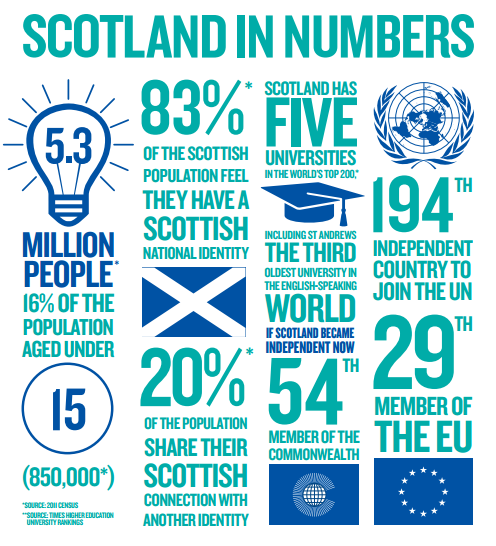
The last 18th of September took place the Scottish referendum/opinion poll to decide whether Scotland should continue being part of the United Kingdom or become an independent country. The image below, taken from the Scottish National Party's (SNP) website, tries to provide evidence as to how Scotland could manage away from the United Kingdom:
Scottish referendum


(On the issue of how Scotland and England became united, visit this entry)


Below I post a video of the very same day 18th September, with everybody getting ready for the referendum to start. Scroll down for the listening activity (answers at the end of the document).


Read more...

6 Oct 2014

School reopens after Oklahoma tornado

Hi everyone!

These days in class we've been talking about cities that had dramatically changed in the last decades.


Today I post a video from the Reuters agency on the tornado that devastated Oklahoma last August 2013. I believe it is a good example of how a city can recover after a natural disaster of this scale.

Below you have the video and the "pdf" with the listening activity (please, find the answers at the end of the document, as usual).


Read more...

26 Sept 2014

How much / many?; some / any

Hello everybody!!

How are you? I hope you are enjoying the weekend!

Today we're going to talk about the difference between some words that are normally difficult for Spanish learners:
  • Much / Many
  • Too much / Too many
  • How much...? How many...?
  • Some / any
Much and many are used for quantities, and they mean "a lot of". The only difference is that much is used for uncountable nouns (always singular), and many for countable nouns (always in plural after many):
I don't want much sugar in my coffee.
There are many children playing in the street.

If there is more than we would like, we use the expressions too much / too many
There is too much noise in this room. I can't sleep.
There are too many students in the class.
And to ask about quantities, we have the question words how much / how many...?
How much water do you drink every day?
How many sandwiches do you want today?
As you can see, much is always followed by uncountable nouns, and many, by countable nouns.

Check this video to revise this a little bit more:


You can do this exercise to practise the difference between how much / how many.


Finally, both for countable and uncountable nouns you can also use some or any. Which one do you use? It depends if the sentence is affirmative (some), negative or interrogative (any).


Click if you need more information about some and any. Finally, you can practise here and here!

Happy learning!!
Read more...

11 Nov 2013

Chimananda Ngozi Adichie: the danger of a single story


Chimamanda Ngozi Adichie
Today I wanted to write about Chimamanda Ngozi Adichie  an Igbo writer from Nigeria that I have very recently discovered. For the moment I have read her short story collection The Thing around her Neck and the novel Purple Hibiscus. I strongly recommend both of them.


She has been labeled as the most prominent of a procession of acclaimed young anglophone authors that has succeeded in attracting a new generation of readers to African literature. Since she's settled in the US, some of her stories also show the cultural clash between the Western and African views of the world.


Listen to her on this very interesting talk about the power of stories. You'll find her extremely easy to understand due to her crystal-clear diction and her outstanding communicative skills.


If you want to read a little bit more about her life, and her writing career, check the document below. You can also visit Chimamanda Ngozi Adichie's official website.


Read more...

4 Nov 2013

Health; going to the doctor's; good stress; present perfect simple vs. continuous

Hi there!

These days we've been talking about health and eating habits. In one of the first sessions we discussed whether milk was good for the body or not . Here I post the video in case you may want to watch it again. If you open it directly on YouTube remember that you can activate subtitles. However, remember that they are computer-generated, so you may find many mistakes. Still, they are still helpful to follow the main ideas.


Read more...

3 Nov 2013

Language, culture and identity: the Sapir-Whorf hypothesis

B2, C1
Hi there!

Today's entry is devoted to the relationship between language, culture and identity: believe it or not, the language we speak shapes the way we are, feel and behave, as it also affects the way our brain works. At the same time, our language is always deeply rooted in one particular culture, which determines the way we think and the way we conceptualize the world.

However, to what extent is that determination true?

Would you agree with the following sentence? What implications does it have?


"Without a culture we cannot see,
but with a culture we are forever blind."
K.J. Irving

The Sapir-Whorf hypothesis holds that the structure of a language affects the perceptions of reality of its speakers and thus influences their thought patterns and world views. Therefore, people who speak different languages can "live" the world from different perspectives and therefore have a richer experience. 

If you are interested in this subject, check out the video below. I must admit it might be a little bit too technical, but it will give you a good picture of what the Sapir-Whort hypothesis defends.

NB: If you open the video on YouTube, you can activate the option "subtitles", although I'm afraid they're only available in Spanish...

Enjoy!


Read more...

10 Oct 2013

Revision of tenses; personality adjectives; relationships

Hi everyone!

Here you have the first entry of the year! I'll regularly post a summary of what we've done in class but, most importantly, I'll also post extra material to consolidate and to expand what we do in the lessons.

We've already advanced quite a lot and are almost finishing Unit 1! These days we've been revising tenses, question formation and auxiliaries. As for vocabulary, we've talked about relationships and also personality.

If you want to continue revising English tenses, try the following exercises online:

  • Revision of tenses 1: here you have exercises with pairs of tenses (present simple vs. present continuous; past simple vs. past continuous; past simple vs. past perfect, etc).
Read more...

28 Sept 2013

The Magic E

Hi!

Today's entry is devoted to the "magic E"! The "magic E" is that silent <e> that is not pronounced, but it magically lengthens the previous sound!

See the difference that the <e> makes in the following pairs of words:
Here you have a song which is used in schools in English speaking countries to show the pronunciation effect of silent <e> at the end of words.

It's a song for children, I know... But it's really catchy, you'll see! And it can help you too! :)


Read more...

11 Feb 2013

Negative prefixes; why men & women can't be friends

Hi everyone,


On Wednesday we worked with negative prefixes (prefixes to form opposite words). These prefixes can be a bit difficult because there is no rule that tells us which prefix we have to use. For example, is it inexpensive or inexpensive?

That means that we have to learn them by heart...!

Here you have the most common negative prefixes, with some examples:

Dis- 

Negative prefixes


Un-
Negative prefixes


In-
Negative prefixes

Il- (always used with words that begin with <l>)


Negative prefixes


Im- (always used with words that begin with <p>)


Negative prefixes


Ir- (always used with words that begin with <r>)

Negative prefixes

You can revise this a little bit more on this link from BBC World Service. If what you want is practise, here you have a matching exercise and a multiple choice exercise(Note that the adjective "satisfied" can have to opposites: "unsatisfied" and "dissatisfied").

Now, changing topic...! The day we saw negative prefixes in class we also discussed some issues about family and friends, and someone asked if you believed that boys and girls could be friends, and just friends.

Well, I've found a video recorded at Utah State University about this topic ("Why men and women cannot be friends"). It's in English with subtitles in Spanish, so check it out! I'm sure you'll find it very funny :)

Read more...

2 Feb 2013

Wikileaks; Bowling for Columbine; Sicko; Gandhi quotes

Hi everyone!

Last week we continued with Unit 5 and we've practically finished it by now.

On Tuesday we talked about Wikileaks (Unit 5.3. in your books). Click here for a newspaper article from The Guardian in which Assange, the founder of the website, criticises and attacks the new WikiLeaks film which is to be released shortly.


Read more...