LAST POSTS

Showing posts with label Culture. Show all posts

18 Dec 2014

A useful tip to convert between miles and kilometres!

Hi there! 

Today I'm going to give you a very useful tip to convert between kilometres and miles! It is specially useful for those who like languages but also have a certain mind for Maths! But even if you don't like Maths, read through the end and see how easy it is!

Have you ever heard of the Fibonacci Sequence? I'm sure you have! For those who don't know, the sequence is as follows:

1, 1, 2, 3, 5, 8, 13, 21, 34, 55, 89, 144...

How does it work? Well, each number results from adding up the two neighbouring numbers:


Now, one interesting aspect of these numbers is that their ratios (divisiones) all approach being what is called the golden ratio: 1,618. So, for example,

  • 3 divided by 2 is 1,5;
  • 5 divided by 3 is 1,666;
  • 8 divided by 5 is 1,6;
  • 13 divided by 8 is 1,625;
  • 21 divided by 13 is 1,615, etc.

And... what does this have to do with kilometres and miles? Well, curiously enough, the ratio of km to miles is 1,609 to 1. Since 1,609 is so close to the golden ratio, you can use the Fibonacci numbers to convert between kilometres and miles!!

  • 5 km is quite close to 3 miles
  • 8 km is almost exactly 5 miles
  • 13 km is 8 miles
  • 21 km is 13 miles, etc.!


Now you won't have any problem with distances when you travel to the United Kingdom! :)
Read more...

12 Dec 2014

Stop phubbing! But... what is that??

Has it ever happened to you that you're with somebody who just can't stop looking at his/her mobile?? How annoying can that be? Well, apparently you're not the only one who gets annoyed!!

In English a new word has even been invented to describe this phenomenon, and it's "PHUBBING":


This kind of situations has become "trending topic" in the last years, and it's just that people don't seem capable of disconnecting from the virtual world!! An entire website (extremely funny, by the way!!) has opened: www.stopphubbing.com. They include data, figures, interesting facts and even a letter you can send to your friends to make them stop phubbing!!


Some of the facts they publish are certainly thought-provoking... See for yourself!


According to this, what will communication be like in a few years? Are you scared of what can happen?

Many people prefer to take it humorously and denounce the situation making videos as funny as this one, by "The Britishes"!:


Funny, huh? :P

Now, if you want to take it a bit more seriously, below I include probably the most watched YouTube video on this topic. It's very straightforward, but composed beautifully in the form of a poem. Its rhythm, careful choice of words and the story behind certainly manages to touch the viewer.

"Look Up", by Gary Turk (click for full text):


Well, after all this I do hope we manage to change our attitude towards smartphones and learn how to enjoy life minute by minute! :)
Read more...

21 Nov 2014

The Christmas Truce - The story behind Sainsbury's Christmas Ad

Hi everyone!

Christmas is coming closer; the days are ticking away...! We can tell from the sweets and cakes already sold at the supermarket, and especially from the adverts shown on television. Last week the commercial for the National Lottery came out - every year we are nervously waiting for it! Our high expectations were certainly met and the advert left nobody impassible.

I believe you would agree that the National Lottery advert is probably the most important Christmas advert in Spain, but would you guess which has been considered the best Christmas advert in the world?


It's the Christmas commercial from the British chain supermarket Sainsbury's:


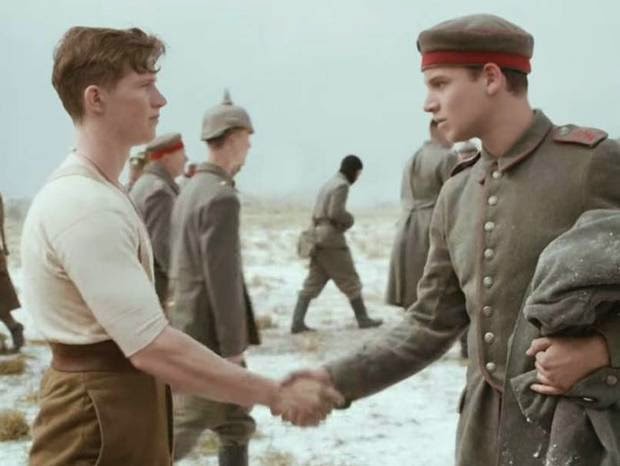
The video is certainly touching, but what is even more touching is to know that it is entirely based on a true story...

By December 1914 World War I had already gone on for around 5 months, and claimed nearly one million lives. However, the weapons fell silent on Christmas Eve... A Captain from the Allies made contact with two German officers at dawn, starting a truce in which soldiers started to leave their trenches and met in hundreds exchanging greetings and gifts.

The true story behind the ad:


All the details of what really happened we cannot know for sure, but there was certainly a truce along the front line. Even at the toughest of times, in the heat of war and in the most dreadful occasions, there can be great humanity...

Read more...

17 Nov 2014

Stereotypes; Lonely Planet Guide

Hi everyone!

The entry today is about "stereotypes". I'm sure all of you have heard the word before, and have a vague idea of what they are, but could you think of a definition??

Now, that is a bit more difficult...

In general, stereotypes are characteristics or qualities assigned to groups of people that share nationality, race, gender, to name but a few. However, these characteristics or qualities tend to be oversimplifications, and they are overgeneralized. In other words, those features are applied to all the individuals in the group disregarding their personal differences.

Now, have a look at this postcard. What do you think of it? Do you agree with the stereotypes associated to the different European nationalities?

There are stereotypes all around us. Below you have a funny (but very insightful) video about what the United States and Europe think of each other. I'm sure you'll feel identified more than once!


How wrong stereotypes can be is usually clearer when we talk about our own culture. Below I post a video about how Madrid is described in the Lonely Planet guide. Do you agree with the image given of the Spanish capital city? 


The best way to overcome stereotypes is to check for yourself! That is, meet people from different parts of the world, travel as much as you can, and read! That way you'll have a more accurate vision of the different nationalities!
Read more...

14 Nov 2014

Race the tube!

Has anyone heard of this new craze for runners?? Race the tube! It consists in beating the tube by running!!

It all started in London last July 2014, when James Heptonstall thought that going on foot could sometimes be quicker than being stuck on public transport! The route he chose was from Mansion House to Cannon Street, two important tube stations in London, 380 metres apart on foot.


As you will see on the video, the challenge consisted in getting off at Mansion House and run to the next tube station, Cannon Street, to catch the very same train! Do you think he succeeded? Check it out!


The Telegraph and many other newspapers covered the story. The video was uploaded on YouTube and received more than 5 million visits! This kickstarted the movement in many other cities!

Race the Tube in Madrid

Race the Tube in Barcelona

Race the Tube in Lyon

Race the Tube in Milan


Race the Tube in Brussels

Race the Tube in Hong Kong

Race the Tube in Stockholm


And how does our protagonist feel? Well, here you have the complete interview with the Race the Tube creator!


Read more...

5 Nov 2014

Guy Fawkes - V for Vendetta

Hello everyone!

Today, 5th November, is a very important day in the United Kingdom. It is Guy Fawkes Night, also known as Guy Fawkes Day, Bonfire Night and Firework Night! It commemorates the failure of the gunpowder plot to blow up the Houses of Parliament.

Children still sing this traditional rhyme which summarizes what happened:


Guy Fawkes

The whole rhyme goes as follows:

Remember, remember the fifth of November,
Gunpowder treason and plot.
We see no reason
Why gunpowder treason
Should ever be forgot!


By god's mercy he was catch'd
With a darkened lantern and burning match.
So, holler boys, holler boys, Let the bells ring.
Holler boys, holler boys, God save the king.
And what shall we do with him?
Burn him!

So what's the story? Well, here you have a very concise summary of how it all happened!
Guy Fawkes


The film "V for Vendetta" was certainly inspired by this story. Watch the video below and pay attention to seconds 24'' to 38''. Does it ring a bell?? :) I strongly recommend you to watch the film (in original version), not just because of its relationship with Guy Fawkes, but also because of the magnificent word plays they use.
Guy Fawkes


Click if you want to read a bit more about the history of Guy Fawkes. You also have an exercise to check how much you understood!

Finally, here you have a video of the fireworks after the celebration of Guy Fawkes!


Read more...

31 Oct 2014

History of Halloween; pumpkin carving

pumpkin carving
Hello everyone!

Today is Halloween and I want all of you to be ready! :) To start with, do you know where the tradition comes from? Here you have a powerpoint presentation with the history of this festivity!


History of Halloween

On the presentation they also talk of the jack-o'-lantern! Originally, it was made of turnip, but now it is made with pumpkins! Have you ever tried pumpkin carving? It's not difficult! All you need is a pumpkin, a knife, a big spoon and a pen!

pumpkin carving


Watch the video below to see how to do it!


Basically, all you need to do is:
1) Remove the top of the pumpkin with the knife. 
2) Take out all the seeds with a spoon. 
3) Then draw a face on the pumpkin and cut it with a knife!
4) Finally, put a candle inside!

Click for some pumpkin carving ideas!!

So... are you going to make a pumpkin this year?? :)
Read more...

17 Oct 2014

Urban legends

Hi there!
Urban legends
Today we are going to talk about urban legends, which are a form of modern folklore made up of stories whose truth is doubtful, but which nonetheless spread like wildfire!


In the document below you have several urban legends taken from www.snopes.com (this website is ideal if you want to check if a spreading rumour is true or not!!). Take some time to think whether you believe these stories, and then check clicking on the link at the bottom of the page!


Once you read that, take some time to watch this video about the 25 most popular urban legends still being told!


Are there any urban legends famous in your area? Please share them in a comment! :)
Read more...

15 Oct 2014

The Scottish referendum

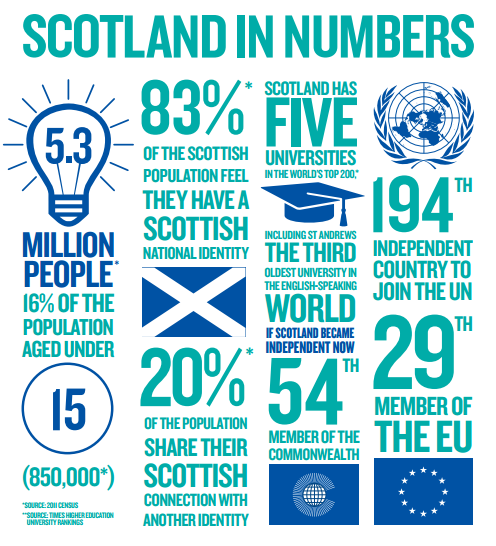
The last 18th of September took place the Scottish referendum/opinion poll to decide whether Scotland should continue being part of the United Kingdom or become an independent country. The image below, taken from the Scottish National Party's (SNP) website, tries to provide evidence as to how Scotland could manage away from the United Kingdom:
Scottish referendum


(On the issue of how Scotland and England became united, visit this entry)


Below I post a video of the very same day 18th September, with everybody getting ready for the referendum to start. Scroll down for the listening activity (answers at the end of the document).


Read more...

13 Oct 2014

How did Scotland and England become united?

United Kingdom
Today, and after the Scottish referendum a few weeks ago, I'd like to write a little bit about British history. More concretely, I wanted to go back in time and analyze when and how Scotland and England became originally united.


Everything goes back to the 16th century... Queen Elizabeth accessed to the throne of England in 1558, becoming the fifth, and eventually the last, monarch of the Tudor dynasty.


Not having married, she did not have any descendants. She was profoundly conscious of the importance of this issue and, fearing what would become of England after her death, she asked his nephew James to become her heir.


He had been King of Scotland since 1567 and so his acceptance and later accession to the throne of England after Queen Elizabeth’s death in 1603 inevitably brought about the union of the Scottish and the English monarchies under one and the same crown.


This Anglo-Scottish unity marked a decisive point in history: bearing in mind the multitude of attempts and the innumerable bloody battles to incorporate Scotland into England, this union was a veritable achievement without the shadow of a doubt. Still, and however significant this event was, the truth is that it faced serious opposition on the part of the English, for they did not want a Scottish –and, what is more, Catholic– King.


At this point we should highlight that King James was not “only” the King of England and Scotland. From the times of Henry VIII (1509 – 1547), the King of England had also been the King of Ireland. Still, it is worth noting that the complete conquest of the island did not take place till 1603, curiously enough the very same year of King James’s accession to the throne of England.

Proceeding like this, he managed to unify the whole of the British Isles under his crown, a deed he was immensely proud of. Being King of England, Scotland and Ireland, it did not take long for him to be proclaimed “King of Great Britain” (1604).

Read more...

11 Nov 2013

Chimananda Ngozi Adichie: the danger of a single story


Chimamanda Ngozi Adichie
Today I wanted to write about Chimamanda Ngozi Adichie  an Igbo writer from Nigeria that I have very recently discovered. For the moment I have read her short story collection The Thing around her Neck and the novel Purple Hibiscus. I strongly recommend both of them.


She has been labeled as the most prominent of a procession of acclaimed young anglophone authors that has succeeded in attracting a new generation of readers to African literature. Since she's settled in the US, some of her stories also show the cultural clash between the Western and African views of the world.


Listen to her on this very interesting talk about the power of stories. You'll find her extremely easy to understand due to her crystal-clear diction and her outstanding communicative skills.


If you want to read a little bit more about her life, and her writing career, check the document below. You can also visit Chimamanda Ngozi Adichie's official website.


Read more...

3 Nov 2013

Language, culture and identity: the Sapir-Whorf hypothesis

B2, C1
Hi there!

Today's entry is devoted to the relationship between language, culture and identity: believe it or not, the language we speak shapes the way we are, feel and behave, as it also affects the way our brain works. At the same time, our language is always deeply rooted in one particular culture, which determines the way we think and the way we conceptualize the world.

However, to what extent is that determination true?

Would you agree with the following sentence? What implications does it have?


"Without a culture we cannot see,
but with a culture we are forever blind."
K.J. Irving

The Sapir-Whorf hypothesis holds that the structure of a language affects the perceptions of reality of its speakers and thus influences their thought patterns and world views. Therefore, people who speak different languages can "live" the world from different perspectives and therefore have a richer experience. 

If you are interested in this subject, check out the video below. I must admit it might be a little bit too technical, but it will give you a good picture of what the Sapir-Whort hypothesis defends.

NB: If you open the video on YouTube, you can activate the option "subtitles", although I'm afraid they're only available in Spanish...

Enjoy!


Read more...

10 Oct 2013

How to get your point across in Spain

Hi there,

I've just found this very interesting article on how we communicate in Spain. I believe the writer manages to capture many of our cultural features, and how we display them in communication... or doesn't he?

How to get your point across in Spain


What do you think of the image given of the Spanish? Do you agree with the way we are portrayed? Feel free to post a comment below!
Read more...

2 Feb 2013

Wikileaks; Bowling for Columbine; Sicko; Gandhi quotes

Hi everyone!

Last week we continued with Unit 5 and we've practically finished it by now.

On Tuesday we talked about Wikileaks (Unit 5.3. in your books). Click here for a newspaper article from The Guardian in which Assange, the founder of the website, criticises and attacks the new WikiLeaks film which is to be released shortly.


Read more...

23 Nov 2012

Culture; Thanksgiving

Hi everyone!

On Tuesday we discussed some intercultural experiences we had had, either in Spain or abroad, and which provided us with insights into other people's cultures, but also our own.

Read more...

21 Nov 2012

Reading; Videos and Indian cuisine; Skyfall

Hi there!

As usual, here I post a summary of what we did last week along with some other complementary/extra material that you may find useful.


Last week we started Unit 3. We began talking about places and travelling, and discussed some sights that we thought were overrated. I've found a link on the Internet about the "10 most disappointing Attractions in Europe". Check it here!


Read more...

20 Nov 2012

"Top Ten Beaches in the World" - thanks to Pablo Suárez

Hi everyone,


I hope your week is off to a good start! :)

The other day we talked about places and discussed sights that had lived up to our expectations, sights that hadn't, and also places we felt guilty about not having visited. Pepe (5º CAL) talked about the Cies Islands, and that reminded Pablo of an article by The Guardian entitled "Top Ten Beaches in the World".

Here you have the link.

Check out for number one! :)

Thanks for sharing, Pablo.
Read more...

11 Nov 2012

Child prodigies; Españasmus

Hi! How's the weekend going? I hope you are making the most of it! :)

In this entry you have a brief summary of what we've done in class this week, together with some other interesting material you might find useful. This week we've mainly focused on speaking and listening, although we've done a little bit of grammar as well: like and as and collocations in 5º CAL; expressing opinion in 5º A. (Please, note that I cover the same areas with both groups, but sometimes on different days).

Read more...

3 Nov 2012

Videos so far: Baumgartner; Bullying; "Friends"

Hi again!

I've been thinking and I don't consider it worthwhile to post everything we've been doing during the past few weeks, but at least I wanted you to have the videos we've watched in class, so that you may watch them again at home.


The first one we saw was the one about Felix Baumgartner. Click here to watch it online.


The other one we have watched so far is the one about bullying. Click here to watch it again.


Read more...

Past simple & past continuous; Halloween

Hello everyone,

In the previous entry I posted some information to revise Unit 1. Here I do the same with Unit 2!

In this unit we have talked about fast food, first meetings, love and relationships, stories and how to start and finish a conversation!

About grammar, we revised how to form the past simple and the past continuous, and when we use them. Be very careful with the pronunciation of the -ed past. The rule "PoKaSH FiCHaS Te Doy" can help!

Read more...