LAST POSTS

Showing posts with label C1. Show all posts

14 Oct 2015

The power of adjectives in descriptions: cities

Hi there!

These days we've been talking about cities and we've learnt some very useful vocabulary to describe them. Below I include some of these words (remember to check their pronunciation!). Can you add any other?

Now, today I didn't want to focus solely on these adjectives, but rather highlight the effect  and crucial importance that adjectives have in our writing and speech: being able to be specific and choose the right word adds value to our language, and colour to our descriptions.

Have a look at the following text about Mexico:
Mexico City is Mexico's capital city and one of the most important political, cultural, educational and financial centres in North America. With a GDP of $411 billion US dollars in 2012, it is ranked as the eighth richest city in the world. Settling on an altitude of more than 2,000 metres, tourists are instantly enamoured by the city's glamour, cultural heritage and contemporary development. Every corner of the city is sprinkled with stories to tell of famous personalities and ancient tribes. While the Aztecs discovered and gave the city its culture and heritage, the Spanish revamped and added their touch. Today, the cultural amalgamation is mirrored in every landmark of Mexico City, be it the Templo Mayor, El Zócalo square, Catedral Metropolitana or Frida Kahlo museum.
  • What feeling do you have when you finish reading?
Now compare it with the text below, about the English city of Middlesbrough:
  • What kind of adjectives are used the most: positive, negative or neutral?
  • How does this affect the impact of the article?


(Note: No offence intended to the people in Middlesbrough. It is deliberately wildly exaggerated to show the power of negative adjectives in an English text.)

The text is evidently extremely negative, something which is mainly achieved via the adjectives used. Now, do the following:
  • Highlight all the negative adjectives/expressions.
  • Replace them with some more positive ones.
  • When you have finished, check the impact the text has on the reader now. Has it changed?
This exercise would be a very good opportunity to start using an antonyms dictionary. Check the entry "Back with dictionaries again! Enrich your vocabulary fast and easy" to learn how to do it!
Read more...

7 Oct 2015

Natural disasters: Chile's earthquake

Hi! 

Today I post a quick listening activity with a video from Reuters News Agency. It covers the earthquake and later tsunami that affected Chile last September 2015. As you know, the topics of "cities", "natural disasters" and "the environment" are included in our curriculum, and therefore in the contents of the different levels.

I ask you to find some time to do this listening activity, and write down some interesting words you could learn. Remember:

  • Watch once for general understanding (forget about the activity at the beginning)
  • Do the activity in the second listening
  • Finally, check your answers in the last listening

As usual, remember that the answer key is at the end of the document :)

Thanks for watching!


After watching this video and doing the activity, you might want to visit: "School reopens after Oklahoma tornado".
Read more...

10 Dec 2014

"If" or "whether": what's the difference?


Whether or ifHi there!

Today I post a grammar lesson on the difference between if and whether. These two words normally pose problems for English students, since the translation into Spanish is the same in both cases (si). Here I'll post an explanation on when to use each. Hope it helps!

In very general terms, we use if in conditional sentences and whether to show that two alternatives are possible. In the cases where both are possible, whether is understood as more formal.

That said, let us look at both conjunctions in some deeper detail:

If and whether are interchangeable in the following contexts:

  • IN REPORTED OR INDIRECT YES/NO QUESTIONS:
She asked if / whether I'd be attending the party.
Do you know if / whether dinner will be ready soon?
I don't know if / whether she's coming or not.
  • "WHETHER / IF ... OR ... " CONSTRUCTIONS
I'd really like to know whether / if he's lying or telling the truth.


Use ONLY whether in the following contexts:

  • TO PRESENT TWO ALTERNATIVES:
Let the principal know whether you'll attend the meeting
(there are two alternatives: you'll attend the meeting or you won't. You have to inform the principal in either case).

Let the principal know if you'll attend the meeting
(this sentence is grammatically correct, but the meaning is different. In this example, the principal is only be told if you'll attend the meeting. Therefore, if you'll attend the meeting is a condition, it doesn't present two alternatives).
  • AFTER PREPOSITIONS:
My final decision depends on whether you agree (on if)
I would like to talk to you about whether you'll continue working here (about if)
  • BEFORE INFINITIVES:
I've been thinking whether to quit my job (if to quit)
She can't make up her mind whether to marry him (if to marry him).
  • DIRECTLY BEFORE OR NOT:
Please, tell me whether or not you agree (if or not)

(Note that or not can be placed at the end of the sentence. In that case, if is possible: Please, tell me if you agree or not).
  • WHEN WHETHER STARTS A CLAUSE:
Whether she liked the present, I don't know.
Whether he comes or not is nor my concern.
I don't care whether you study or waste your time.

(If we use if in these contexts it would be understood as a condition)
  • WHEN WHETHER EXPLAINS SOMETHING THAT COMES BEFORE:
You have to answer my question, whether I can count on you (that is my question).


Use ONLY if in the following contexts:

  • TO INTRODUCE A CONDITION:

If I had the chance I would travel all around the world.
If it hadn't been for my family, I wouldn't have got so far.

YOUR TURN! :)

Now check how much you can remember with the following exercises!


Read more...

28 Nov 2014

Exam practice C1 level (I)

Hi!

The exams are coming closer and I wanted to give you some exam practice to get ready!

These exams are all taken from the Cambridge Advanced Certificate in English, which roughly corresponds to a level C1:

READING

USE OF ENGLISH

LISTENING

Good luck! :)
Read more...

24 Nov 2014

Learn how to be more descriptive!

Hi there!

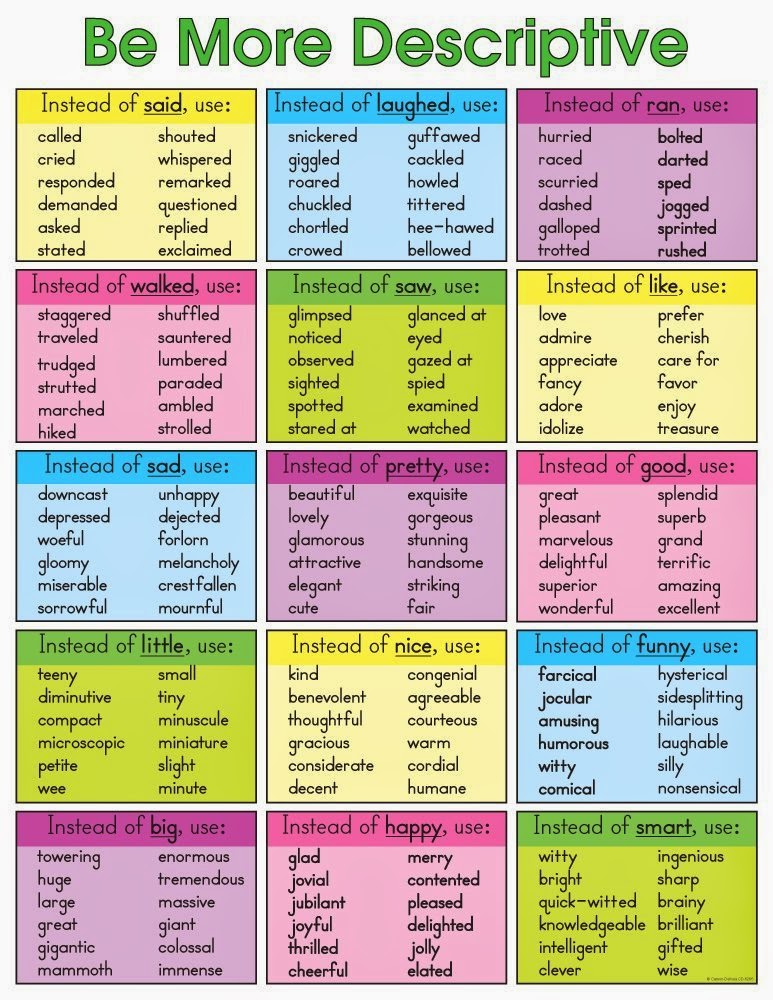
I'm sure you've all heard your teachers asking you to use more complex vocabulary, and avoid using words like nice, good, say, ask, etc. Indeed, as we advance in our language learning, we have to be more specific and avoid 'empty words' like the ones I mentioned before.

How can we do that? A very good idea is to compile a list of synonym words and include some linguistic variation when we talk/write. Here I post an example: 

My suggestion is that, for every word, you choose two or three synonyms that you've never used before. Circle/underline them and make an effort to use them in the next few weeks. That way you'll enrich your vocabulary little by little!

Let me know how it goes! :)
Read more...

19 Nov 2014

Improve your conversations in English!

Hi everyone!
Oral interaction

Today we're going to focus on speaking and, more specifically, on interaction!

As you know, a language is, above all, a vehicle to communicate with other people. That means that we need to know phrases to express our opinion and ask for theirs, agree or disagree with what they say, ask them to repeat, show interest, etc.

Knowing how to interact is an essential part of our speaking skills in a foreign language. Responding to what other people say and being able to engage them in conversation is of paramount importance. However, explicit training on this issue is sometimes overlooked (pasado por alto) in our language classrooms...

For this reason I have done a compilation of useful phrases that you can use at different levels. Start using them in your conversations in class and you'll see how little by little your communication becomes a lot more natural and fluent!

If you find this useful, please feel to share on your social networks!

Basic Levels 1 and 2


Intermediate Level


Advanced Levels 1 and 2


C1


Read more...

17 Nov 2014

"Bed and breakfast", "fish and chips" and other binomial expressions

A binomial is a combination of two words, normally linked by a conjunction (and or or). Their order is almost always fixed, that is, they are irreversible.

English is extremely fond of binomials, and when I say "extremely", I do mean "extremely"!  If you want to check for yourselves, have a look at this list of binomials, with their corresponding meanings. You'll be surprised!

Do these ones ring a bell??


Some other common ones include:


If you want to know a few more, check the video below: "10 common binomial expressions in English". She speaks rather slowly, but her explanations and examples are very accurate!


Finally, for more advanced learners, here I post a handout with some more complex ones. See if you can complete the exercises! (The answers are at the end, as usual!)


Now, the best way to remember binomials, as every other item of vocabulary, is to place them in context. Choose your favourite ones and post a few examples in the comments below!
Read more...

6 Nov 2014

Politics: anti-corruption raids in Spain

Hi everybody!

Today's entry is a summary of one of my lessons and, as you can see, the topic is politics. I'm going to share some of the materials I used in class for you to practise reading, listening and also learn some vocabulary related to politics!

Without a doubt, politics is becoming a hotly debated topic in the streets today because of the countless cases of corruption that are coming to light. What characteristics do you think every politician should have? Would you include some of the ideas below? (please, look up the new words in a dictionary).

Every time there is a "domestic" scandal, it is well-advised to investigate a little bit and see how the international press is covering it. Is the image of Spain abroad changing? For the better or for the worse? Have a look at the following three newspaper articles and see for yourselves:
After reading the articles, take some time to think about the following questions:
  1. What are the main points put forward?
  2. How is Spain depicted?
  3. Is there any reference to the Spanish citizens' attitude towards these events?
  4. How do you feel about the articles?
Finally, we're going to end with a short video from Euronews. Watch it the first time to see how much you understand. Then do the listening activity below (the answers are at the end of the document, as usual!)


After these activities I hope you now have some more ideas and vocabulary to talk about this so up-to-date topic!
Read more...

3 Nov 2014

Stop sounding like a book!

Hi there!

Today I'm going to post some useful expressions that will help you sound a lot more natural in English!

They're mainly short comments to continue the conversation and respond to what the other person said. Things like ya te digo; ¡ni de broma!; me lo dices o me lo cuentas; lo que tú digas, etc.

Useful, right? Check them out!


Had you heard any of these expressions before? Check their meaning in a dictionary or at www.linguee.es. Then practise with this online exercise from the Yes! Magazine. After that, why don't you write a short dialogue with as many expressions as you can?

Enjoy!! :)

Read more...

27 Oct 2014

The police is... or are? - Singular and plural invariable nouns

Hi there!
Invariable nouns

The other day in class some of you asked me about nouns which are always singular, and nouns which are always plural. This is important for the ageement (concordancia) with the verb and pronouns.

Well, here you have a complete list of those nouns!

Nouns which are always singular (singular invariable nouns)
  • Proper nouns, e.g. Sally, Bruce, Jamie.
  • Uncountable nouns. If we want to count them, we have three options:
     1. Measures: one pound of butter; two litres of milk; three kilos of sugar...  

     2. Partitives: a piece of, a bit of, an item of... 

     3. Specific counters: a flash of lighting; a word of advice; a burst of applause...
  • Some nouns ending in -s
               1. News

               2. Subjects and sciences which finish in -ics: linguistics, politics, phonetics...

               3. Some games: billiards, draughts, darts, dominoes...

               4. Certain diseases: measles, mumps, rickets, shingles...
  • Collective nouns, which refer to groups of single entities. The verb can be either singular or plural; the decision depends on whether the speaker is thinking of the group of a whole or as a collection of individuals:
               Government, team, company, council, committee...

Nouns which are always plural (plural invariable nouns)
  • Tools, instruments and articles of clothing which consist of two parts joined together: glasses, scissors, binoculars, spectacles, trousers, jeans, trunks, tights, shorts...
  • Nouns that refer to entities which comprise an indefinite number of parts: clothes, outskirts, stairs, surroundings, goods, remains...
  • Some proper nouns: the Netherlands or the States
  • Nouns that do not have an -s, but are plural anyway: police, people, staff, clergy, folk, cattle, poultry, livestock
Useful? :)
Read more...

20 Oct 2014

Emphatic structures (1): Cleft and pseudo-cleft sentences

Cleft sentence
Hi there!


Today we are going to be concerned with emphatic structures. English offers many different ways to give prominence to specific parts of the sentence and we'll explore all of them little by little.


In this entry we are going to focus on cleft and pseudo-cleft sentences, which allow us to emphasize different parts of the sentence by dividing it into two parts (these two parts will be marked with a double slash // )


Cleft sentences are formed with it is/it was + emphasized element + relative clause. Different parts of the sentence can be emphasised in this way:

1.     Dave lent me his car last week.
a.     It was Dave  // who/that lent me his car last week.
b.     It was his car  //  that/which Dave lent me last week.
c.     It was last week  //  that/when Dave lent me his car.

We can also find examples with because:
It was because he was angry  // that he didn't come to the cinema.
Pseudo-cleft sentences are introduced by what and the emphasis is postponed to the end (in cleft-sentences the emphasis is at the beginning):
Dave lent me his car last night --> What Dave lent me last night  //  was his car. 
I love rainy days --> What I love  //  are rainy days. 
You need a rest --> What you need  //  is a rest.
We can also emphasise events using the auxiliaries do/did:
Peter forgot his keys at the cinema --> What Peter did  //  was (to) forget his keys at the cinema.
We are destroying our planet --> What we are doing   //  is (to) destroy our planet.
Last but not least, we can also start a sentence with all to mean "the only thing".
I only need you --> All I need  //  is you

If you need more information, click on the following links on cleft sentences and pseudo-cleft sentences.

Finally, download the following document if you want some practise! (The answers are at the end of the document).


Read more...

17 Oct 2014

Urban legends

Hi there!
Urban legends
Today we are going to talk about urban legends, which are a form of modern folklore made up of stories whose truth is doubtful, but which nonetheless spread like wildfire!


In the document below you have several urban legends taken from www.snopes.com (this website is ideal if you want to check if a spreading rumour is true or not!!). Take some time to think whether you believe these stories, and then check clicking on the link at the bottom of the page!


Once you read that, take some time to watch this video about the 25 most popular urban legends still being told!


Are there any urban legends famous in your area? Please share them in a comment! :)
Read more...

15 Oct 2014

The Scottish referendum

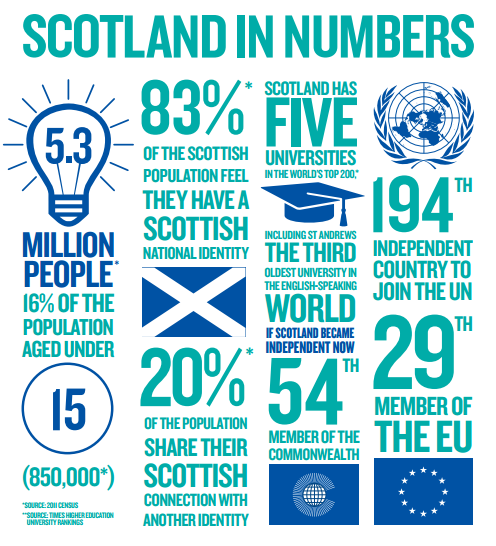
The last 18th of September took place the Scottish referendum/opinion poll to decide whether Scotland should continue being part of the United Kingdom or become an independent country. The image below, taken from the Scottish National Party's (SNP) website, tries to provide evidence as to how Scotland could manage away from the United Kingdom:
Scottish referendum


(On the issue of how Scotland and England became united, visit this entry)


Below I post a video of the very same day 18th September, with everybody getting ready for the referendum to start. Scroll down for the listening activity (answers at the end of the document).


Read more...

7 Oct 2014

Can you use the word "indeed"? Indeed I can!


B2, C1

In yesterday’s class we discussed the possible uses and meanings of the word indeed, which can be a bit tricky to translate. Some of you suggested it was synonymous with “in fact”, although in some cases it can also mean something like “certainly”, “very” or it can even be used to express surprise - “you’re telling me!” (¡no me digas!).


To start with, the word indeed originates from the Latin phrase in dede, which meant “in truth”. This meaning can clearly be seen in all of the following four uses:
  • When it is used after very + an adjective/adverb, it has a clearly emphatic meaning: 
Thank you very much indeed.
I was very happy indeed to hear about your results!
  • It can be used to emphasize a positive statement or answer:
That is indeed the person I was talking about.
They are indeed braver than most people.
‘Was he very upset?’ ‘Indeed he was!’
‘Do you agree?’ ‘Yes, indeed.’
  • At the beginning of a sentence, it is used to complete or add information to a statement. In other words, indeed provides emphasis or indicates that the sentence is evidence/an example of what was said previously.
Yes, I passed the exam. Indeed, I got the highest mark in the whole class.

You don’t have to thank me. Indeed, I am delighted to help.

The economic crisis has a negative influence on how much we spend. Indeed, foreign investments have never been as low.
  • As an interjection, indeed indicates surprise or sarcastic doubt. In this use, indeed is often the only word in the sentence.
"He thinks she'll marry him??" "Indeed!" (¡Vaya si lo piensa!)

I hope you now have a clearer idea of how to use the word indeed! If you still have any questions or doubts, or simply want to say how useful you found this entry, feel free to post a comment below!

Read more...

6 Oct 2014

School reopens after Oklahoma tornado

Hi everyone!

These days in class we've been talking about cities that had dramatically changed in the last decades.


Today I post a video from the Reuters agency on the tornado that devastated Oklahoma last August 2013. I believe it is a good example of how a city can recover after a natural disaster of this scale.

Below you have the video and the "pdf" with the listening activity (please, find the answers at the end of the document, as usual).


Read more...

30 Sept 2014

Saxon genitive ('s) or of + noun?

B2, C1

"Saxon genitive ('s) or of + noun?... that is the question."

Choosing between the Saxon Genitive ('s) or the structure "of + noun" can sometimes be difficult. Below I include all the factors that influence the choice. I'm sorry if the explanation is a bit too technical, but it's the only one there is...


To start with, it is important to note that there are lexical, syntactic, communicative and relational factors influencing the choice between the Saxon genitive and a prepositional phrase (of).

  • Lexical factor (related to vocabulary)
When the possessor is a person, the genitive is preferred, e.g. John's boat.
  • Syntactic factor (related to grammar)
If the noun has a very long modifier, we prefer the of-construction, e.g.
The answer of the student who was sitting next to the window
(NOT The student who was sitting next to the window's answer).
  • Communicative factor, depending on where we want to lay emphasis:
The world's economy --> emphasis on economy.
The economy of the world --> emphasis on the world.
  • Relational factor (related to the relation between the words)
- Partitive meaning: the of-construction is preferred --> A glass of water; a pint of beer

- Object relation: it favours the of-construction: The imprisonment of the murderer  (they put the murderer in prison - object)


- In subject relations both are equally used: the arrival of the train / the train's arrival (the train arrived - subject).


Well, I hope this explanation has been useful!


If you have any questions or comments, please leave them below!

Read more...

15 Sept 2014

What is a Level C1?

C1
Hi there!

As you know, in the last years people are increasingly enrolling in C1, but many of them don't really know what it is asked for at this level.

For many it's a continuation of level B2, but once you start you'll realise there's a big jump between one and the other. Therefore, from the very beginning of the year I believe it convenient for you to get acquainted with what C1 level really means.


With this purpose in mind I've selected this information from the Common European Framework, which perfectly sets the objectives in the different skills.


Now that you know what we have ahead this year... pull your socks and get down to work! :)


Read more...

3 Nov 2013

Language, culture and identity: the Sapir-Whorf hypothesis

B2, C1
Hi there!

Today's entry is devoted to the relationship between language, culture and identity: believe it or not, the language we speak shapes the way we are, feel and behave, as it also affects the way our brain works. At the same time, our language is always deeply rooted in one particular culture, which determines the way we think and the way we conceptualize the world.

However, to what extent is that determination true?

Would you agree with the following sentence? What implications does it have?


"Without a culture we cannot see,
but with a culture we are forever blind."
K.J. Irving

The Sapir-Whorf hypothesis holds that the structure of a language affects the perceptions of reality of its speakers and thus influences their thought patterns and world views. Therefore, people who speak different languages can "live" the world from different perspectives and therefore have a richer experience. 

If you are interested in this subject, check out the video below. I must admit it might be a little bit too technical, but it will give you a good picture of what the Sapir-Whort hypothesis defends.

NB: If you open the video on YouTube, you can activate the option "subtitles", although I'm afraid they're only available in Spanish...

Enjoy!


Read more...